
Tankless vs traditional water heater: is the extra cost worth it in Conway SC
By Diego Marsh · Updated 2026-06-28
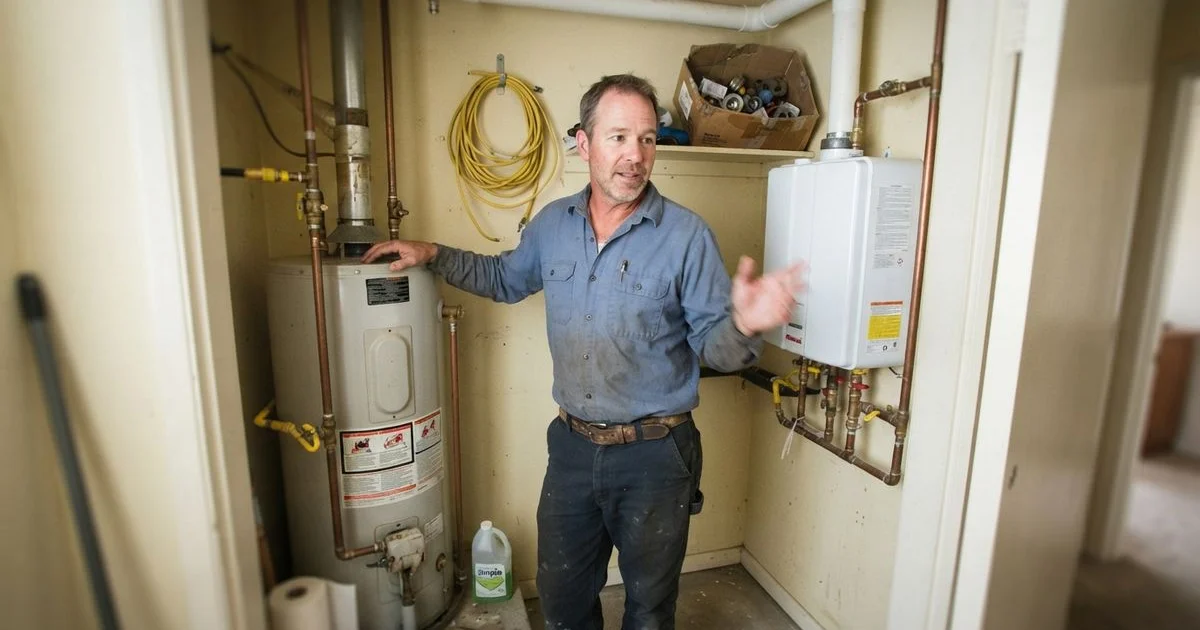
A water heater dies at the worst possible time, and the plumber standing in your garage is asking a question you weren’t ready for: stick with a tank, or go tankless. The tankless unit costs more today. Whether that difference is worth it depends on how long you’re staying in the house, how your home is set up, and how much hot water your household actually uses.
Conway’s mix of older homes near downtown and newer construction along Highway 501 means the honest answer is “it depends on your gas line and venting,” not a blanket recommendation either way. The water heater installation and repair category page covers who does this work locally; this guide covers the decision itself.
What actually changes between the two
A tank heater keeps 40-50 gallons hot at all times, whether you’re using it or not. That standby heat loss is where a chunk of its running cost comes from. A tankless unit fires up only when a tap opens, heating water as it passes through, so there’s no tank sitting warm all day.
That difference plays out in a few concrete ways:
| Factor | Traditional tank | Tankless |
|---|---|---|
| Typical upfront cost | Lower unit price, simpler install in most homes | Higher unit price, often more labor for venting and gas line work |
| Monthly operating cost | Higher, from standby heat loss | Lower, water is heated only on demand |
| Expected lifespan | 8-12 years | 15-20 years with regular descaling |
| Hot water supply | Limited by tank size, can run out | Continuous, limited by flow rate instead of volume |
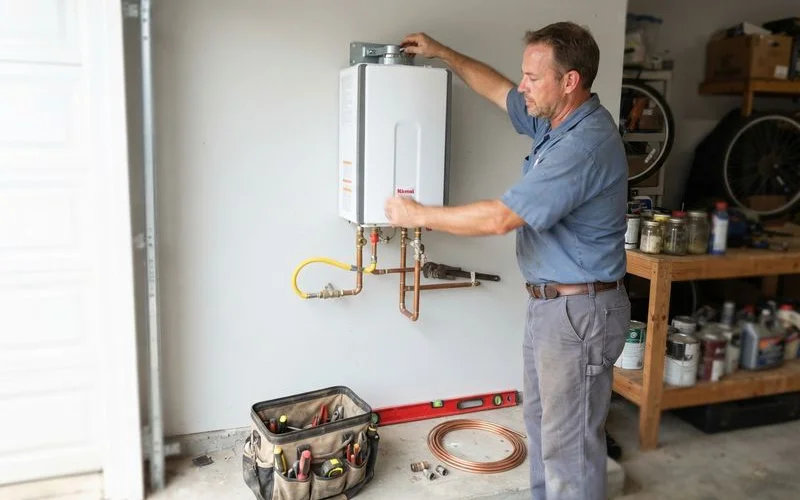
| Space needed | Floor space for the tank | Wall-mounted, frees up floor space |
| Retrofit difficulty | Usually a straight swap | May need new venting, gas line, or electrical capacity |
Where the upfront cost gap actually goes
Most of the price difference between the two isn’t the unit alone, it’s what the install requires. If your home already has a gas line sized for a tankless unit and a place to vent it, the labor gap shrinks. If a plumber has to run a larger gas line, add venting through an exterior wall, or upgrade an electrical panel for an electric tankless model, that’s where the bulk of the extra cost shows up. Ask for an itemized quote that separates the unit price from the retrofit work, so you can see exactly what’s driving the number.
Hard water is worth asking about too. Tankless units need periodic descaling to keep their heat exchangers clear, and skipping that maintenance shortens the unit’s life and can void a warranty.
Who actually comes out ahead
A household staying in the same house for 10+ years, with high hot water demand (a family running multiple showers, a dishwasher, and laundry back to back) tends to see the tankless math work out fastest, since the lower running cost and longer lifespan have time to offset the bigger install bill. A household planning to sell within a few years, or one with low hot water demand, may never recoup the extra cost, and a straightforward tank replacement is the more practical call.
Households on a tight upfront budget shouldn’t feel pressured into tankless. A well-maintained tank heater is a perfectly reasonable, lower-cost choice, and a plumber pushing a tankless swap without asking about your gas line, venting, and how long you plan to stay in the home is skipping a step they shouldn’t skip.
Questions worth asking before you decide
Before signing off on either option, ask the plumber quoting the job:
- Does my current gas line and venting support a tankless unit, or does that need upgrading?
- What’s the full installed price, broken out by unit cost versus retrofit labor?
- What size (measured in gallons per minute) does my household actually need?
- What does routine maintenance cost over the unit’s life, and is it something I can do myself or does it need a service call?
A quote that answers all four with specifics, rather than a flat “tankless is better,” is a good sign you’re working with someone who scoped your home rather than reciting a sales pitch.
The bottom line
There’s no universal right answer between tank and tankless. The math depends on your home’s existing gas and venting setup, how long you’ll own the house, and how much hot water your household actually pulls through it in a day. Get quotes for both, ask for the retrofit costs broken out separately, and weigh that against how many years you expect to get out of the choice. For background on how we evaluate the businesses that do this work, see our methodology. You can also browse the full directory for other plumbing needs around Conway.
FAQ
- Is a tankless water heater actually cheaper to run than a tank?
- Usually, yes, on the monthly utility bill. A tankless unit only heats water on demand, so it isn't keeping 40-50 gallons hot around the clock. The gap shows up as lower gas or electric use over a year, not as a smaller install bill up front.
- How much more does a tankless unit cost to install?
- Expect the unit itself to cost more than a comparable tank, and the install often runs longer because of venting and gas line work. Homes that already have the right size gas line and venting in place see a smaller gap than homes that need those upgraded.
- Can every house in Conway switch to tankless?
- Not without a check first. Tankless units need enough gas line capacity (or a dedicated electrical circuit for electric models) and proper venting. A plumber has to confirm your home can support it before quoting a swap.
- Do tankless water heaters really last longer?
- Most manufacturers rate tankless units for 15-20 years against 8-12 years for a standard tank, with regular descaling. That gap is a real part of the math, but only if the unit gets the maintenance it's rated for.