
Is plumbing damage covered by homeowners insurance in South Carolina
By Diego Marsh · Updated 2026-07-18
This is general information, not insurance or legal advice. Policy language varies by insurer; review your specific policy or ask your agent before assuming coverage applies.
A plumbing failure raises an immediate financial question most homeowners haven’t thought through ahead of time: will insurance actually cover this? The honest answer depends heavily on whether the damage was sudden or gradual, a distinction that decides more insurance disputes than almost anything else in a plumbing claim.
Sudden and accidental: usually covered
Standard homeowners policies generally cover water damage from a sudden, accidental event, a pipe that bursts from a freeze, a supply line that fails without warning, a water heater tank that suddenly ruptures. The logic is that you couldn’t reasonably have prevented or predicted it. Coverage typically applies to the resulting water damage: flooring, drywall, and belongings, though the pipe or water heater itself may be treated separately since replacing a failed part is closer to a maintenance cost.
Gradual and long-term: usually not covered
This is where the coverage gap actually lives. A slow leak behind a wall that’s been dripping for months before anyone noticed, corrosion that finally gives out, or damage from a known issue that was never repaired, insurers typically treat these as maintenance failures rather than accidents, and maintenance is the homeowner’s responsibility, not the policy’s. If an adjuster can show the damage built up over time rather than happening suddenly, that’s usually grounds to deny or limit a claim. When a denied claim leaves you covering a big repair out of pocket, our guide to financing a plumbing repair covers ways to spread that cost out.
Sewer and drain backup: check for a specific rider
Sewer backup is a common point of confusion. Many standard homeowners policies exclude it entirely unless you’ve added a specific endorsement, sometimes called a sewer or drain backup rider. Given that a backed-up sewer line can cause serious property damage and a genuine health hazard, it’s worth checking your policy for this specific coverage before you need it, not after.
A quick reference
| Situation | Typically covered | Typically not covered |
|---|---|---|
| Pipe bursts suddenly from a freeze | Water damage, yes | Pipe replacement itself, often not |
| Water heater tank ruptures without warning | Water damage, yes | Unit replacement, often not |
| Slow leak behind a wall, discovered after months | Rarely | Usually treated as a maintenance issue |
| Sewer or drain backup | Only with a specific endorsement | Standard policy, usually no |
| Flood from outside the home (storm, rising water) | No | Requires separate flood insurance |
Note that flood damage from outside the home, storm surge, rising water, heavy rain overwhelming drainage, is a different category entirely and generally requires separate flood insurance, not homeowners coverage.
What actually strengthens a claim
- Document before cleanup. Photos and video of the damage before anything is repaired or removed give an adjuster something concrete to review.
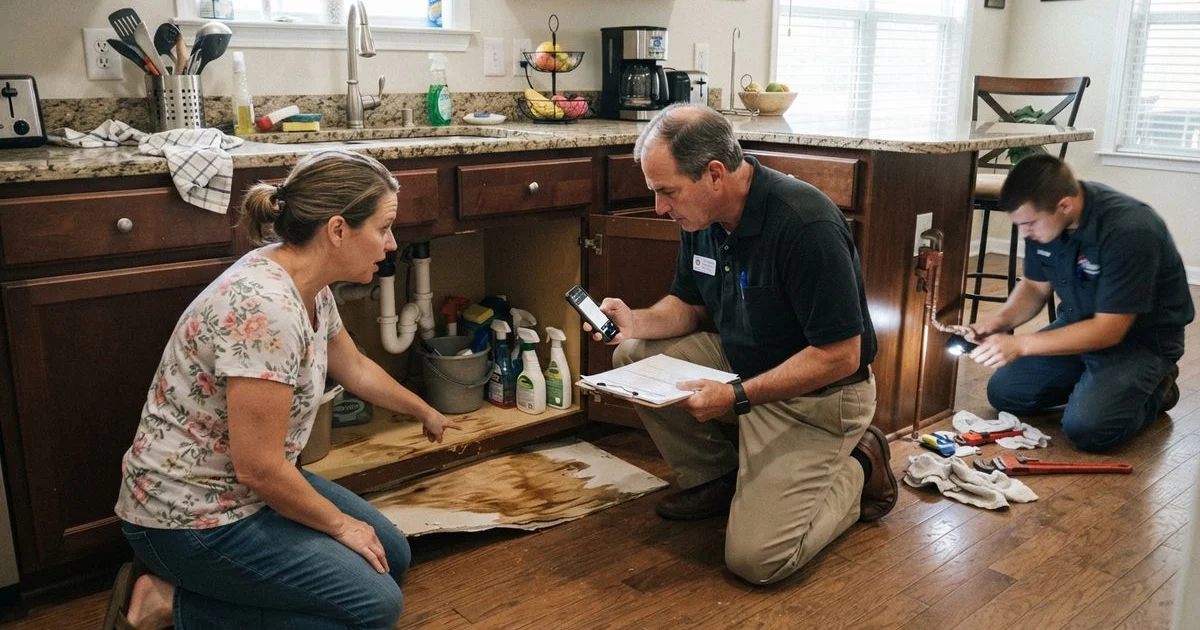
- Get a written assessment from the plumber. A description of what failed and why, ideally noting whether it looks sudden or gradual, supports your case either way.
- Report promptly. Most policies have a reporting window, and waiting to file can itself be grounds for denial regardless of the underlying cause.
- Keep maintenance records where you have them. Evidence that you’ve had routine service done (water heater flushes, drain cleaning) can help counter a “you should have caught this” argument on a borderline claim.
Why the plumber’s own notes matter to the claim
An adjuster wasn’t in the house when the pipe failed, so the plumber’s written account of what they found often carries real weight in how a claim gets decided. Ask the plumber to note specifically what they observed: whether the pipe showed sudden failure (a clean split, fresh corrosion) versus long-term deterioration (heavy scale buildup, staining that suggests a slow drip over time). A vague invoice that just says “replaced pipe” gives an adjuster nothing to work with, while a detailed note supports your version of events either way.
When to loop in a public adjuster
For a large claim, especially one involving structural water damage from a burst pipe or a slab leak, it can be worth hiring a public adjuster, someone who works for you rather than the insurance company, to help document damage and negotiate the settlement. This isn’t necessary for a small claim, but for a five-figure repair with disputed scope, the fee (often a percentage of the settlement) can pay for itself if it meaningfully increases what gets approved.
The bottom line
Coverage hinges on sudden versus gradual, and on whether you’ve added specific riders for backup or sewer issues. Before you need to file a claim, it’s worth a five-minute call to your agent asking directly: what’s covered if a pipe bursts, what’s covered if a drain backs up, and whether either has an endorsement you don’t currently carry. That conversation is a lot cheaper than finding out the hard way. For how we evaluate the plumbers who handle these repairs, see our methodology, and visit the home page for other categories.
FAQ
- Does homeowners insurance cover a burst pipe?
- Usually, yes, if the burst is sudden and accidental. Coverage typically applies to the water damage that results, not necessarily to the cost of replacing the pipe itself, which is treated as normal wear and maintenance.
- Is a slow, gradual leak covered the same way?
- No, this is where most denied claims come from. Insurers generally treat gradual leaks as a maintenance issue the homeowner should have caught, rather than a sudden accidental event, so coverage is far less likely.
- Does homeowners insurance cover sewer backup?
- Often not by default. Sewer and drain backup typically requires a separate endorsement or rider added to the policy, so check whether you have one before assuming a backup is covered.
- What should I do immediately after plumbing damage if I plan to file a claim?
- Document everything with photos and video before cleanup starts, get a written repair estimate and a description of the failure from your plumber, and contact your insurer promptly, since most policies have reporting deadlines.