
What counts as a plumbing emergency, and what to do before help arrives
By Diego Marsh · Updated 2026-07-04
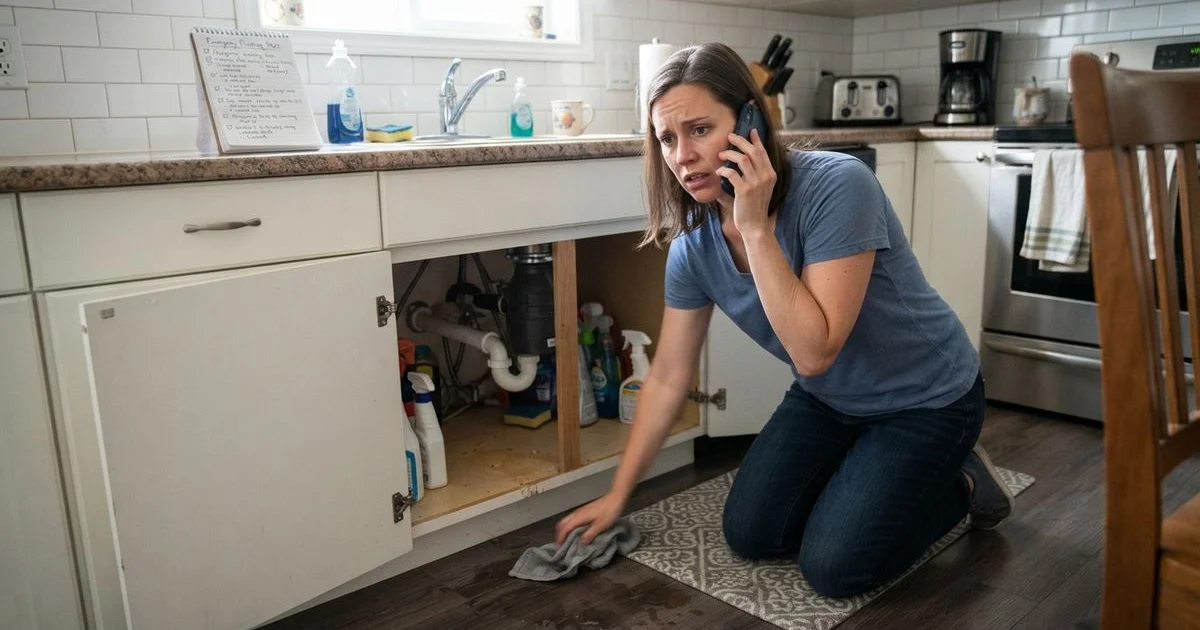
Not every plumbing problem is an emergency, and treating every one like a five-alarm fire means paying after-hours rates for something that could have waited. But a handful of situations genuinely can’t wait, and knowing the difference, plus what to do in the first few minutes, changes how much damage you end up dealing with.
What actually counts as an emergency
| Situation | Emergency? | Why |
|---|---|---|
| Burst or actively leaking supply pipe | Yes | Water damage compounds by the minute |
| Sewage backing up into the home | Yes | Health risk plus rapid property damage |
| No water at all, whole house | Yes | Often signals a bigger failure upstream |
| Gas smell near any fixture or water heater | Yes, treat as urgent | Safety risk, leave and call from outside |
| Water heater leaking from the tank itself | Yes | Tank failure won’t fix itself and can worsen fast |
| Running toilet | No | Wastes water, not causing damage |
| Slow drain | No | Annoying, but not urgent |
| Dripping faucet | No | Can wait for a scheduled visit |
| No hot water, but cold water works fine | Usually not | Inconvenient, rarely an active-damage situation |
The common thread in the true emergencies: water is actively going somewhere it shouldn’t, or there’s a safety risk like gas. Everything else can typically wait for a normal appointment, even if it’s annoying in the meantime. A good number of burst-pipe calls in Conway trace back to a cold snap; the freeze and storm prep guide covers stopping that before it starts.
The first three things to do
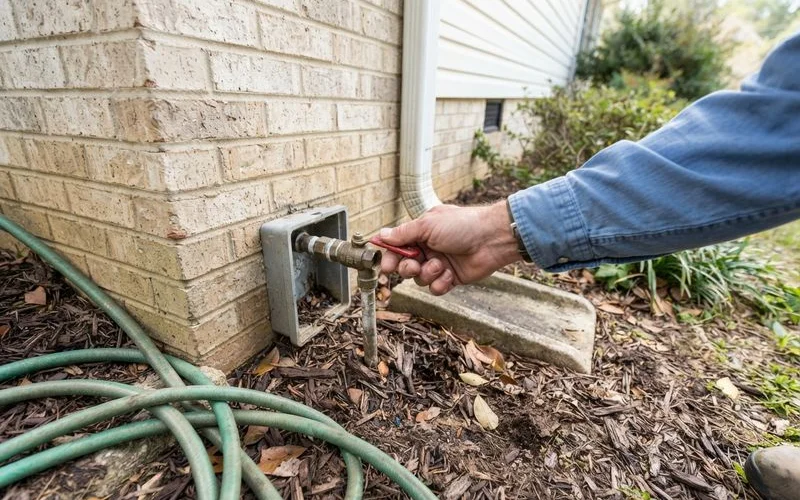
- Find and use your main shutoff valve. This is the single most useful thing you can do before help arrives, and it only works if you know where the valve is ahead of time. In most Conway homes it’s near where the water line enters the house, in a crawlspace access, a utility closet, or near the water meter outside. If you don’t know where yours is, that’s worth figuring out today, not during your next emergency.
- Shut off the water heater if it’s involved. If the emergency involves the water heater, or if you’re shutting off the main and don’t know how long the water will be off, turn off the water heater too, whether that’s the gas supply valve or the electrical breaker, so it isn’t running dry.
- Contain what you can, safely. Towels, buckets, and moving anything valuable off the floor helps limit damage while you wait. Don’t step into standing water near outlets or a breaker panel, and don’t attempt any electrical work yourself.
Gas smell: the one exception to “handle it yourself”
If you smell gas anywhere near a fixture, appliance, or your water heater, stop reading this list of steps and leave the house. Don’t flip light switches, don’t use your phone until you’re outside, and don’t try to locate the source yourself. Call your gas utility’s emergency line first, then a licensed plumber. This is the one plumbing situation where doing less yourself, and doing it faster, is the right call.
What to tell the plumber when you call
Give the dispatcher or answering plumber the specifics up front: what’s happening, whether water is actively running, whether you’ve already shut off the main, and whether anyone in the home is in immediate danger. A 24-hour emergency plumbing provider will triage faster with those details than with “something’s wrong with my pipes.”
Mention if the situation involves sewage, since that changes what equipment and protective gear the technician brings, and mention your address clearly along with any access issues, like a locked gate or a dog that needs to be secured before they arrive.
After the water is off
Once the immediate danger is contained, an emergency call isn’t necessarily still an emergency-rate call. If you’ve stopped the water and the situation is stable, it’s worth asking the plumber directly whether the fix can happen during normal hours at a lower rate, versus something that genuinely needs to happen tonight. A plumber who’s upfront about that distinction, rather than treating every after-hours call as maximum urgency, is usually one worth keeping on your contact list.
Knowing your shutoff valve location and the difference between “urgent” and “can wait” saves money and stress. For details on how local providers are ranked, see our methodology, and visit the home page to browse other plumbing categories.
FAQ
- Where is my home's main water shutoff valve?
- In most Conway homes it's near where the water line enters the house, often in a crawlspace access, basement, or an exterior wall near the water meter. Find it before an emergency happens, not during one.
- Is a running toilet an emergency?
- No. It wastes water and is worth fixing soon, but it isn't causing active damage. It can wait for a normal appointment rather than an after-hours call.
- What if I smell gas near a plumbing fixture or water heater?
- Leave the house immediately, don't touch light switches or anything electrical on the way out, and call your gas utility's emergency line from outside before calling a plumber.
- Should I try to fix a burst pipe myself before the plumber gets there?
- Focus on stopping the water, not fixing the pipe. Shut off the main valve, then contain what you can with towels or buckets. Leave the actual repair to the plumber.