
Freeze and storm prep: protecting Conway SC pipes before the next cold snap
By Diego Marsh · Updated 2026-07-10
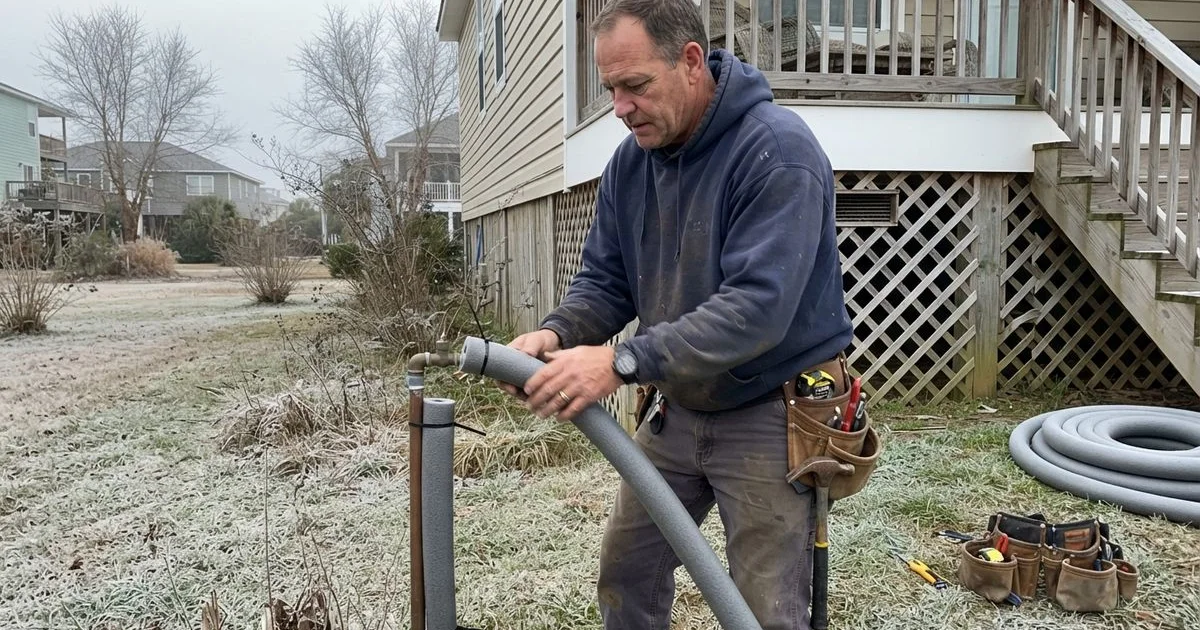
Conway doesn’t get hard winters, which is exactly the problem. A handful of freezing nights a year isn’t enough to justify building every home with the pipe insulation standard in a colder state, but it’s enough to catch homeowners off guard when a genuine cold snap rolls through Horry County. A little prep before the temperature drops beats an emergency call after a pipe splits. The leak detection and pipe repair providers in Conway see this pattern every winter; this guide covers the prep that keeps you off their emergency list.
Why occasional cold is riskier than constant cold
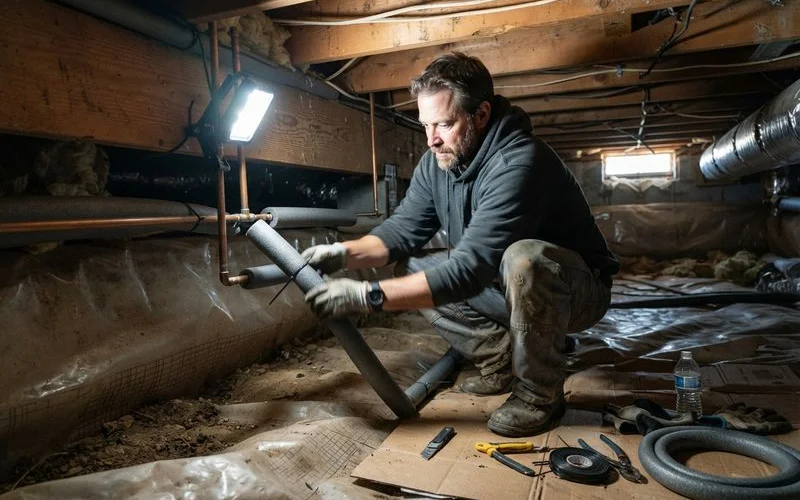
Homes in places with reliably cold winters are built for it: pipes run through insulated interior walls, crawlspaces are sealed and conditioned, and freeze protection is standard. Coastal South Carolina homes, including a lot of Conway’s older housing stock, often route pipes through less-insulated crawlspaces or exterior walls, because a hard freeze is rare enough that it wasn’t the top design priority. When a cold snap does hit, usually a few nights a year, that gap shows up fast.
Before a freeze warning: what to check now
- Find your main shutoff valve and make sure everyone in the household knows where it is, before you need it in a hurry.
- Disconnect outdoor hoses and drain any water left in exterior spigots. A hose left attached traps water in the pipe behind the faucet, and that trapped water is what actually splits it when it freezes.
- Insulate exposed pipes, especially anything running through a crawlspace, garage, or exterior wall. Foam pipe sleeves from a hardware store cover most of what a typical Conway home needs.
- Seal obvious gaps around where pipes enter the house, since cold air infiltration around a pipe penetration is often the real cause of a freeze, not just outdoor temperature alone.
During a freeze warning
- Let faucets drip. A slow, steady drip on both hot and cold sides of faucets connected to exposed or exterior-wall pipes keeps water moving, and moving water is far less likely to freeze solid than standing water.
- Open cabinet doors under sinks on exterior walls so warmer household air can reach the pipes underneath.
- Keep the heat on, even if you’re away, rather than turning it off to save money during the cold snap. A consistent indoor temperature matters more than the thermostat setting itself.
Freeze prep vs storm and flood prep
Freezing pipes and heavy rain are different risks, but Conway homeowners deal with both. Storm and flood prep for plumbing looks different:
| Risk | Freeze prep focus | Storm and flood prep focus |
|---|---|---|
| Main concern | Pipes splitting from ice expansion | Groundwater overwhelming sewer or septic lines |
| Key action | Insulate, drip faucets, disconnect hoses | Check sump pump, watch for slow drains |
| Timing | Ahead of a specific cold snap | Ahead of and immediately after heavy rain |
| Warning signs | No water flow, frozen sections feel solid | Backups, gurgling drains, standing water near a septic drain field |
Heavy rain can push groundwater into low-lying sewer and septic connections faster than it would in drier inland areas, which is part of why Horry County sees more storm-related plumbing calls than a typical dry-climate region. If drains start running slow or gurgling after a big storm, that’s worth a call before it turns into a backup.
If a pipe does freeze or burst
Shut off the main water valve immediately if you find a burst or split pipe, and don’t run hot water directly onto a frozen section, since rapid temperature change can crack a pipe that’s already stressed. A slow thaw with a hair dryer on a frozen-but-intact section is reasonable if you can safely access it; anything already split needs a plumber, not a home fix. Our plumbing emergency guide covers the shutoff and containment steps in more detail if you need them in the moment. Emergency plumbers in Conway see a real spike in calls during and right after a hard freeze, so expect wait times to stretch on the coldest nights of the year.
A little prep before the cold arrives, insulated pipes, disconnected hoses, and a dripping faucet on the worst nights, closes off most of the freeze risk a Conway home actually faces. For how local plumbers are ranked, see our methodology, and check the home page for other plumbing categories.
FAQ
- Do pipes really freeze in Conway, SC?
- Yes, on the handful of nights each winter when temperatures drop into the mid-20s or lower, especially with wind. It doesn't happen often, which is exactly why many homes here aren't built with the same insulation standards as colder climates.
- What temperature should I set my faucets to drip at during a freeze warning?
- A slow, steady drip from both hot and cold on exposed or exterior-wall faucets is enough. Moving water is much less likely to freeze than standing water in a pipe.
- Should I disconnect outdoor hoses before winter?
- Yes. A hose left attached can trap water in the spigot and the pipe behind it, and that trapped water is what actually splits the pipe when it freezes.
- What should I do after heavy rain or flooding, separate from freeze concerns?
- Check your sump pump if you have one, watch for slow drains that could signal a stressed sewer or septic system, and avoid running large amounts of water until you're confident the system is draining normally.