
What to expect during a drain or sewer line cleaning visit
By Diego Marsh · Updated 2026-07-06
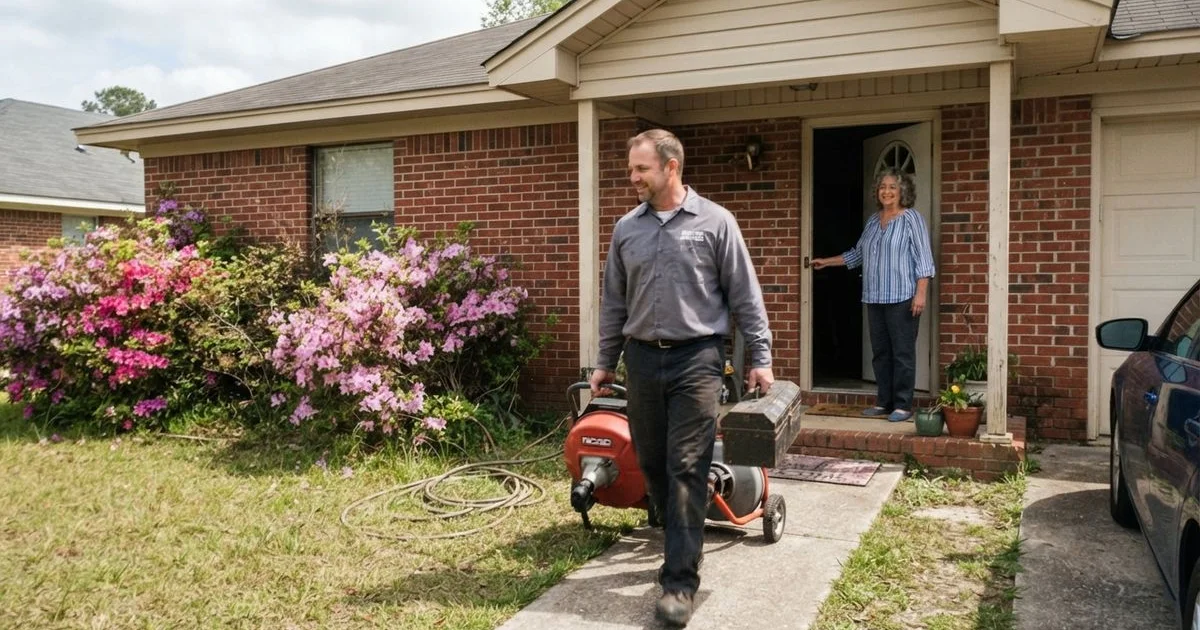
Booking a drain or sewer cleaning visit and not knowing what’s about to happen makes the whole thing feel bigger than it needs to be. Here’s the actual sequence, from the knock on the door to the invoice.
Step 1: the technician asks what’s happening
Before touching any equipment, a good technician asks specific questions: which fixture is affected, how long it’s been happening, whether it’s gotten worse recently, and whether you’ve tried anything yourself (a plunger, a store-bought drain cleaner, and so on). This isn’t small talk, it narrows down whether you’re looking at a simple localized clog or something further down the line.
Step 2: locating the cleanout
Most homes have a cleanout, a capped pipe fitting that gives direct access to the drain or sewer line without pulling a fixture apart. It might be inside near a laundry area or bathroom, or outside near the foundation. Older homes in Conway’s downtown-adjacent neighborhoods sometimes have cleanouts that have been paved over or buried, which can add time to this step. If yours can’t be found quickly, the technician may need to access the line through a fixture instead.
Step 3: clearing the clog
This is where the method depends on what’s actually wrong:
- Cabling or snaking: a flexible cable with a rotating head is fed into the line to break up or hook the clog and pull it back out. This is standard for most single-fixture clogs.
- Hydro jetting: high-pressure water scours the full diameter of the pipe, useful for grease buildup or root intrusion that a cable alone won’t fully clear. Not every pipe is a good candidate, older or already-fragile pipe can be damaged by high pressure, so a technician should check pipe condition first.
- Camera inspection: for recurring problems or a full sewer line concern, a technician runs a video camera through the line to see exactly what’s going on, root intrusion, a bellied section, a collapsed joint, rather than guessing from symptoms.
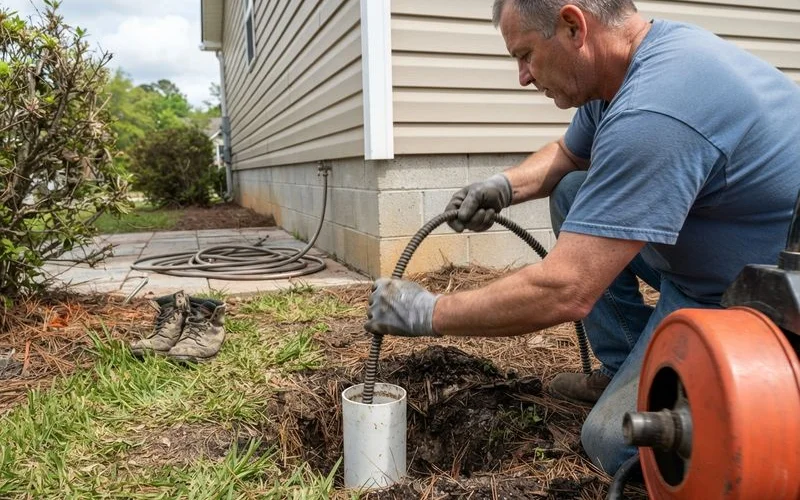
Step 4: confirming the fix held
A thorough technician runs water for a few minutes after clearing the line, checking that it drains at normal speed and doesn’t back up again. For sewer line work, this might mean flushing multiple fixtures at once to confirm the whole system is clear, not just the point where they were working.
Step 5: the walkthrough and invoice
Before wrapping up, expect the technician to explain what they found, whether it was a one-time clog or a sign of a bigger issue, and what (if anything) to watch for going forward. If a camera inspection was part of the visit, ask to see the footage and get a copy if the company offers one. That record is useful if the same section causes trouble again down the line.
What separates a good visit from a rushed one
| Sign of a thorough visit | Sign of a rushed one |
|---|---|
| Asks about history before starting | Starts snaking immediately without questions |
| Explains which method they’re using and why | Uses one method regardless of the problem |
| Tests the fix by running water afterward | Leaves as soon as the clog breaks free |
| Flags recurring-issue patterns | Says nothing about whether it might come back |
| Offers camera footage for sewer line work | No documentation of what was actually found |
When one visit isn’t enough
If a technician clears a clog but flags root intrusion, a bellied pipe, or repeated backups in the same spot, that’s worth taking seriously rather than just booking another cleaning next time it happens. Recurring problems in the same location usually point to a structural issue in the line that cleaning alone won’t solve. The drain and sewer cleaning providers in Conway generally offer camera inspections specifically to catch this before it turns into a bigger repair. If a backup has already reached the point of standing sewage in the house, the health risks and first steps matter more in that moment than the cleaning method.
Knowing the sequence ahead of time, questions first, cleanout location, method choice, confirmation, walkthrough, makes it easier to tell a solid visit from a rushed one. For details on how we score the companies doing this work, see our methodology, or head to the home page to browse other plumbing categories.
FAQ
- How long does a typical drain cleaning visit take?
- A single clogged drain often takes 30 minutes to an hour. A full sewer line cleaning or camera inspection can take one to two hours depending on how far the technician has to run the equipment and how many access points the home has.
- What's the difference between snaking and hydro jetting?
- Snaking uses a flexible cable to physically break up or hook a clog. Hydro jetting uses high-pressure water to scour the full width of the pipe, which clears grease buildup and root intrusion more thoroughly, but not every line is a candidate for it.
- Will the technician need to go inside my house?
- Often, yes, to access a cleanout point, but many homes also have an exterior cleanout that avoids that. Ask when you book if you'd rather the visit stay outside.
- Do I need to be home for the whole appointment?
- For most straightforward jobs, being available at the start to point out the problem and at the end to review findings is enough. Full sewer line work with a camera inspection is worth staying for so you can see the footage firsthand.